

I didn’t start caring about the Best Portable Power Banks for iPhone & Android because of specs. I started caring because my phone died at the worst possible times—once during a long drive with Google Maps running, another time while waiting for an Uber late at night, and several times during long workdays.
If you use an iPhone or Android phone heavily, battery anxiety becomes normal. Not dramatic just annoying. And that’s exactly where a good portable power banks earns its place.
This article isn’t based on marketing claims or spec sheets alone. It’s based on what actually works day to day, what feels annoying to carry, and what you end up trusting after months of use.
Why Most People Buy the Wrong Portable Power Banks
A lot of people buy the first portable power banks they see with a big number on the box. “20,000 mAh” sounds impressive. Sometimes it is. Sometimes it just means a heavy brick that stays at home.
What matters more than capacity is how often you actually carry it and how fast it charges when you need it.
A portable power banks that stays in a drawer is useless.
What Really Matters in a Portable Power Banks (From Real Use)
Capacity in Real Life
No portable power banks delivers 100% of its rated capacity. That’s normal. Energy loss happens. Good brands plan for it. Cheap ones pretend it doesn’t exist.
From experience:
- 10,000 mAh usually gives about 1.5 to 2 full phone charges
- 20,000 mAh comfortably handles a full day or two
- Anything above that is for travel or multiple devices
Charging Speed Changes Everything
Fast charging isn’t a luxury anymore. It changes behavior.
Waiting 30 minutes to get 60–70% battery feels very different from waiting two hours for the same result. Once you get used to fast charging, slow power banks feel broken—even when they’re not.
Size and Weight Are Deal Breakers
A portable power banks can be powerful and still annoying. If it pulls your pocket down or makes your bag feel heavier than it should, you’ll stop carrying it.
This is where many “great on paper” models fail.
Portable Power Banks That Actually Make Sense
1. Anker Nano Power Bank (10,000 mAh, 45W)
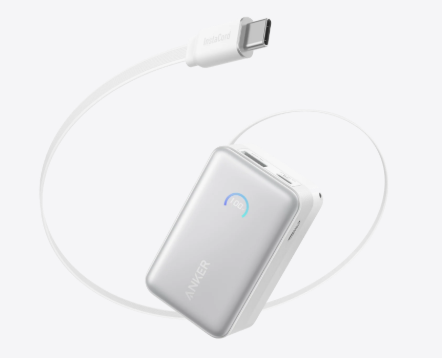
This is the kind of power bank you don’t think about—and that’s a good thing.
It’s small enough to carry every day and fast enough that plugging it in actually feels worth it. The built-in USB-C cable sounds like a minor feature, but it solves a very real problem: forgetting cables.
If you use both iPhone and Android devices, it just works. No drama.
Best for: Daily use, workdays, commuting
Why people keep it: Size + speed + reliability
2. Anker MagGo Power Bank (10,000 mAh)
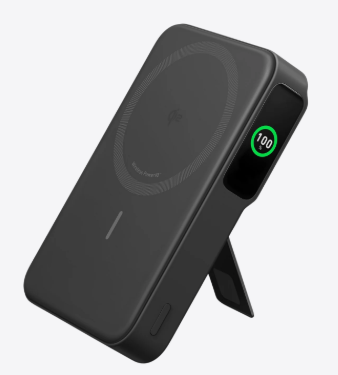
Magnetic charging isn’t about speed. It’s about comfort.
Snapping a power bank onto the back of an iPhone and continuing to scroll, text, or navigate feels natural. No cables dangling. No awkward angles.
This model sticks well, doesn’t slide around, and doesn’t make the phone feel ridiculously heavy.
It also supports wired charging, which matters if you’re switching between devices.
Best for: iPhone users who like clean setups
Why people keep it: Convenience over raw power
3. INIU 10,000 mAh Power Bank (45W)
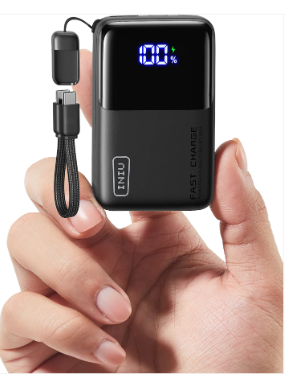
INIU doesn’t get the same hype as Anker, but it probably should.
This power bank feels honest. It’s not flashy. It’s not ultra-thin. But it delivers solid performance at a price that makes sense.
You feel the weight, yes—but that weight translates into confidence when you’re away from outlets all day.
Best for: Travel, long days, budget-conscious buyers
Why people keep it: Value without feeling cheap
4. Anker 737 Power Bank (PowerCore 24K)
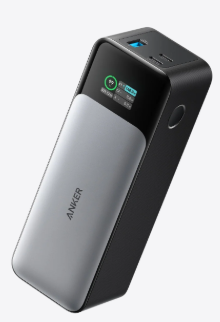
This is a serious power bank for people who actually use their devices hard.
The display isn’t just for show. It’s useful. Seeing output, input, and remaining charge helps you understand what’s happening instead of guessing.
It’s big. It’s expensive. But it’s dependable—and that matters when you’re relying on it.
Best for: Professionals, frequent travelers
Why people keep it: Trust and performance
5. Anker Prime Series (26,000–27,000 mAh)
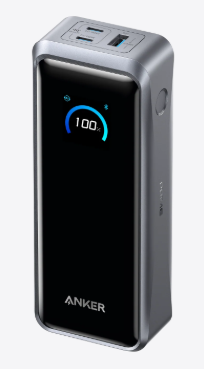
These are not pocket chargers. They’re portable power stations.
If you carry multiple devices—phones, earbuds, accessories—you’ll appreciate how these handle everything without slowing down.
They’re airline-friendly, well-built, and designed to last years, not months.
Best for: Long trips, shared charging
Why people keep it: No compromises
6. Baseus Blade Pro (20,000 mAh, 100W)
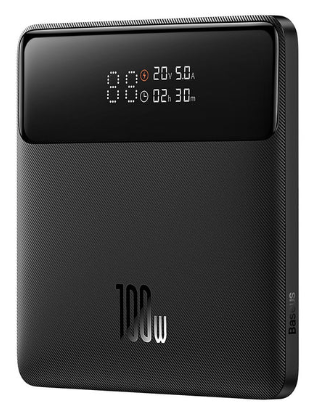
Most high- Portable power banks are bulky. This one isn’t.
It fits into laptop bags without adding awkward bulk. The thin profile makes a bigger difference than you’d expect.
It’s one of those products that feels better in real use than it looks on paper.
Best for: Users who want power without bulk
Why people keep it: Form factor
Wired vs Wireless: A Practical Take
Wireless charging is convenient. Wired charging is reliable.
Wireless power banks are great for:
- Short top-ups
- Navigation use
- Desk or car charging
Wired charging is better when:
- Battery is critically low
- Time matters
- Efficiency matters
Most people end up using both.
About Safety (This Matters More Than Reviews Admit)
Portable Power banks get hot. That’s unavoidable. The difference is how they manage heat.
Better brands age more slowly. They lose capacity at a predictable rate. Cheap ones degrade fast and unpredictably.
This isn’t something you notice in week one—but you will notice it after six months.
Choosing the Right One Without Overthinking
If you:
- Carry it daily → 10,000 mAh
- Travel often → 20,000 mAh
- Charge many devices → 25,000 mAh+
- Hate cables → magnetic or built-in cable
That’s it.
Final Thoughts
A Portable power banks isn’t exciting. It’s practical. And the best ones disappear into your routine until the moment you need them—then they matter a lot.
The models listed here aren’t just popular. They’re trusted. They’re the ones people keep using instead of replacing.
And in a category full of exaggerated claims, that’s what actually counts.
